Frankford Umbrella Wind Ratings Explained: What Each Rating Means for Your Property
Quick Summary
Wind ratings measure the gust speeds an umbrella can withstand before tipping or sustaining damage, with canopy size, pole material, and base weight all factoring into the number. Market and cantilever styles have different tolerances because each design distributes pressure differently. Coastal properties, rooftops, and open pool decks need higher ratings than sheltered courtyards. Regular base weight checks and prompt repairs keep umbrellas performing closer to their tested capacity throughout the season.
Umbrellas take more punishment from weather than almost any other piece of outdoor furniture on a property. Wind catches the canopy, stresses the pole, and tests the base in ways that seating and tables never experience. A Frankford umbrella comes with wind ratings that indicate how it performs under specific conditions.
These numbers often get overlooked during the buying process. Being familiar with what these ratings mean helps properties avoid replacing damaged umbrellas every season.
Understanding Frankford Umbrella Wind Ratings
Wind ratings measure the speed at which an umbrella can withstand sustained gusts without tipping, collapsing, or sustaining structural damage. Manufacturers test these products under controlled conditions, applying wind pressure to the canopy and pole to determine a safe operating range.
These numbers vary based on canopy size, pole material, and base weight. A large market umbrella with a wide canopy catches more wind than a smaller cantilever style, so the two products carry different ratings even within the same product line. The Frankford umbrella collection includes several sizes and styles, each tested and rated according to its specific design and intended use.
Properties in coastal or open areas experience stronger, more frequent gusts than those in inland locations shielded by buildings or landscaping. Matching the wind rating to a property’s actual climate conditions matters more than picking the largest or most attractive umbrella available.
Why Wind Ratings Matter for Hospitality Properties
Umbrellas that fail in wind create safety hazards beyond the cost of replacement. A canopy that flips inside out or a pole that snaps mid-storm can injure guests or damage nearby furniture and structures.
Insurance and liability concerns come into play too. Properties that install umbrellas without checking wind ratings against local weather patterns take on risk that a bit of upfront research could have avoided. Storm damage claims often get scrutinized more closely when equipment wasn’t rated for the conditions it faced.
Guest experience factors in as well. An umbrella that constantly needs to be closed during windy afternoons limits the availability of shade exactly when guests want it most. Choosing a product rated for a property’s typical wind conditions keeps outdoor spaces usable throughout the season rather than closed off during breezy stretches.
How Wind Ratings Break Down by Umbrella Type
Different umbrella styles carry different baseline wind tolerances due to their construction and how they distribute pressure. A few common categories illustrate this range:
- Market umbrellas: Center pole design distributes wind load through the pole and base, generally handling moderate wind well
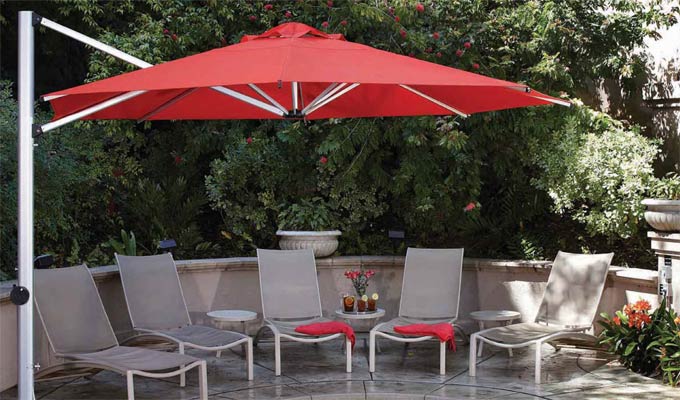
- Cantilever umbrellas: Offset pole design creates more leverage in high wind, often requiring heavier bases for stability
- Commercial-grade aluminum frames: Tend to flex slightly under gusts rather than snapping, which helps absorb pressure
- Fiberglass ribs: Bend under wind pressure and return to shape, offering flexibility that rigid materials don’t provide
- Auto-tilt and vented canopies: Vents release pressure buildup, reducing strain on the frame during gusty conditions
Base weight plays into every category on this list. Even a well-rated umbrella pole and canopy can tip over if the base doesn’t provide enough counterweight for the prevailing wind conditions.
Choosing the Right Rating for Your Property’s Climate
Climate assessment should come before umbrella selection, not after. Coastal properties, rooftop decks, and open pool areas without windbreaks need higher wind ratings than a shaded courtyard tucked between buildings.
A property’s elevation matters here too. Wind speeds tend to increase with height. A rooftop pool deck or upper-floor terrace typically needs sturdier umbrellas than a ground-floor patio in the same general location. The commercial outdoor furniture chosen for these spaces often needs to meet wind and stability standards similar to those for the umbrellas placed alongside it.
Seasonal weather patterns also factor into the decision. Properties in regions with occasional severe storms might benefit from umbrellas rated for higher gusts, even if daily conditions stay calm most of the year. Planning for the worst day rather than the average day tends to prevent costly replacements down the line.
Maintenance Tips That Support Wind Performance
A few maintenance habits help umbrellas perform closer to their rated capacity over time:
- Check base weight regularly, since some fillable bases lose water or sand over time and need topping off
- Inspect pole and rib connections for looseness, as wear can reduce structural integrity during gusts
- Close umbrellas during severe weather warnings, since even well-rated products have limits under extreme conditions
- Clean canopy fabric periodically, as dirt and debris buildup can add unnecessary weight and stress
- Replace worn components promptly, since a single weak point can compromise the entire umbrella’s wind resistance
Staff training also plays a role. Grounds crews who know when and how to close umbrellas ahead of forecasted wind events help protect the investment and keep guests safe during sudden weather shifts.
Getting the Most From Your Umbrella Investment
Wind ratings deserve a spot on the checklist right alongside canopy color and pole finish when planning outdoor spaces. A beautiful umbrella that tips over in the first strong gust costs more in replacement and liability than the upfront savings ever justify.
At Resort Contract Furnishings, these conversations come up often with properties working through outdoor furnishing projects near coastlines, rooftops, and open pool decks. Matching umbrella specifications to actual site conditions makes a real difference in how long the equipment lasts and how well it protects guests from sun and weather.
Planning Umbrella Selection Around Real Wind Conditions
Getting the wind rating right from the start saves a property from mid-season replacements and unhappy guests stuck without shade on breezy days. A bit of planning around site conditions, elevation, and typical weather patterns goes a long way toward choosing equipment that lasts.
Every property faces different wind exposure depending on location, height, and surrounding structures. Drop us a message to talk through which umbrella specifications make sense for your outdoor spaces.
FAQs
What does a wind rating measure?
A wind rating indicates the sustained gust speed an umbrella can handle before tipping, collapsing, or sustaining structural damage. Manufacturers test canopy and pole strength under controlled conditions to determine this number.
Does umbrella size affect its wind rating?
Yes, larger canopies catch more wind and generally carry different ratings than smaller styles. A wide market umbrella and a compact cantilever model perform differently under the same gust conditions.
Why does base weight matter for wind resistance?
Even a well-rated pole and canopy can tip over without enough counterweight underneath. Fillable bases can lose water or sand over time, so regularly checking and topping off their weight is important.