Grosfillex Outdoor Tables For Commercial Spaces: What Hospitality Buyers Should Know
Quick Summary
Grosfillex outdoor tables hold up in commercial settings because of aluminum frames, resin tops, and finishes built to resist sun and moisture damage. Table height, shape, and spacing shift based on whether furniture sits on a pool deck, a restaurant patio, or a lounge area, so one style rarely covers every space well. Routine cleaning and hardware checks keep tables performing for years without early replacement. Pairing tables with matching seating pieces, like chaise lounges, keeps a property’s outdoor layout consistent across finishes and wear patterns.
Outdoor furniture takes a beating in commercial settings. Poolside tables get moved and wiped down several times a day. Dining sets sit outside through every season, exposed to sun, rain, and constant foot traffic. Lounge areas see turnover between guests from early morning until closing.
At Resort Contract Furnishings, we’ve carried Grosfillex tables for over two decades. Hospitality buyers ask about this line often, and for good reason. For a property looking into new outdoor tables, a handful of practical points are worth reviewing before you place an order.
This is less about color or shape. It’s about how a table holds up in a pool deck environment, a restaurant patio, or a busy hotel courtyard, and what that means for your budget over the next several years. A table that looks great in a catalog photo doesn’t always hold up the same way once it’s outside every day.
What Makes Grosfillex Outdoor Tables a Fit for Commercial Spaces
This line shows up across resorts, restaurants, and clubs for a few practical reasons. Commercial buyers care less about trends and more about how furniture performs under daily wear, and Grosfillex has built a reputation around that kind of reliability.
A few qualities set it apart:
- Frame material: Aluminum construction that resists rust and holds shape after years outdoors
- Weather resistance: Resin tops and finishes made to handle sun exposure without fading or cracking
- Stacking options: Several table styles that stack or fold for storage during off-season months
- Weight: Light enough to move for cleaning, heavy enough to stay in place during wind
Beyond the physical build, sourcing also has a practical side. Property managers managing multiple locations benefit from a line with consistent sizing and finishes across styles. It keeps furniture uniform even when different pieces get ordered at different times.
Material Choices That Affect Long-Term Performance
Material choice matters more outdoors than it does indoors. A table frame that looks fine in a showroom can behave differently after a summer near saltwater or a winter of freeze-and-thaw cycles. Indoor furniture rarely deals with this kind of stress, so it’s worth treating outdoor tables as a separate category.
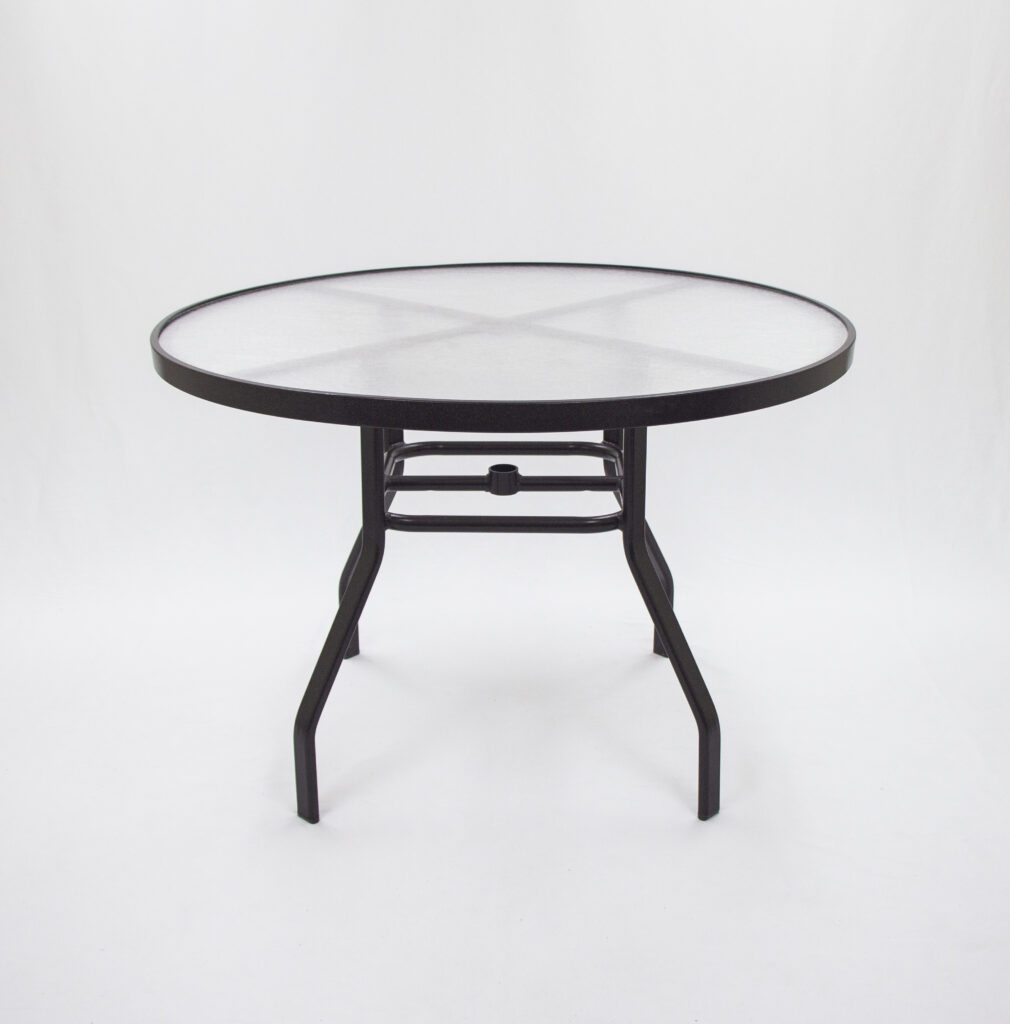
Aluminum frames are a common pick for commercial properties because they don’t rust and they hold their shape after repeated moves. Resin tabletops handle direct sun better than wood or untreated metal, and they don’t need refinishing every season. Both materials also clean up faster after spills, which matters on a busy patio where staff doesn’t have much time between seatings.
Buyers sometimes focus only on the table itself and forget how it needs to work with the rest of the seating area. Some properties pair their dining tables with Grosfillex chaise lounges along the pool deck. Matching height, finish, and weight class across pieces keeps the whole layout looking intentional instead of mismatched. Planning the table and seating together from the start saves a reorder later on, and it also helps when replacing worn pieces down the line since the finishes stay consistent.
Color and finish matter too, though less than durability. Darker finishes hide scuffs better in high-traffic areas. Lighter finishes can show wear sooner near pool decks with sunscreen and chlorine exposure. Some properties choose a middle-tone finish specifically to balance those two concerns. It hides minor marks without absorbing as much heat in direct sun.
Sizing and Layout for Hospitality Spaces
Table size decisions come down to space and flow more than personal taste. A restaurant patio with tight walkways needs a different footprint than an open pool deck with room to spread out. Getting this wrong early on often creates headaches later, since resizing a whole seating area after furniture arrives is far more disruptive than planning it out first.
Square and rectangular tables often fit tighter spaces better, especially along walls or in corner seating. Round tables can make conversation easier for larger groups and work well in open areas where guests linger longer.
Height matters too. Standard dining height works for restaurant seating, but pool decks and lounge areas sometimes call for shorter tables paired with lounge chairs. Getting this wrong means guests either lean too far to reach a drink or feel cramped next to a table that sits too high. Small mismatches of this kind are easy to overlook on paper but become obvious once furniture is in place.
Spacing between tables affects both guest comfort and staff movement. Servers need enough room to pass through without brushing chairs. Guests need enough distance from neighboring tables for a private conversation, particularly in restaurant settings where noise and proximity affect the overall dining experience.
A property with a pool deck, a restaurant patio, and a lounge area might need three different table styles to serve each space properly. One style stretched across all three rarely works as well as it looks on paper, since each area has its own traffic patterns and guest expectations.
Maintenance Habits That Extend Table Life
Even durable outdoor furniture needs some upkeep to look and perform its best over time. A simple routine keeps tables in good condition longer and helps properties avoid early replacement costs.
- Cleaning: Rinse tabletops with mild soap and water on a regular schedule, especially near pools
- Storage: Stack or cover tables during storms or off-season closures when possible
- Hardware checks: Inspect bolts and connectors a few times a year, since outdoor conditions can loosen fittings
- Sun exposure: Rotate umbrella placement or shade coverage to reduce uneven fading over time
Our care and maintenance guidance covers these steps in more detail, along with tips specific to different material types. Staff training also plays a role here, as front-of-house teams often handle daily cleaning and are the first to notice loose hardware or early signs of wear.
Small maintenance habits, done consistently, add up over a few seasons. Properties that build a simple checklist into their regular cleaning routine tend to get more years out of their furniture without needing major repairs.
Getting Your Outdoor Furniture Plan Right
Commercial outdoor tables are a long-term investment, and the details above make a real difference in how long that investment lasts. Frame material, sizing, layout, and routine maintenance all affect how a table performs after a few busy seasons.
A property that plans for these details upfront usually avoids costly reorders later. Get in touch with our team, and we’ll help you find a setup that fits your space.
FAQs
Do Grosfillex outdoor tables work for both restaurants and pool decks?
Yes. The line covers a range of heights and finishes, so a property can outfit a restaurant patio and a pool deck with styles suited to each space.
How often should commercial outdoor tables be replaced?
That depends on climate, usage, and maintenance habits. A well-maintained aluminum or resin table can last many seasons before it needs replacing.
Can these tables handle coastal or high-humidity locations?
Aluminum frames and resin tops generally hold up well in coastal conditions, since they resist rust and don’t absorb moisture the way some other materials do.